October 22, 2026
What’s on our wish list?
When we imagine our new home, we’re thinking about much more than the buildings themselves. We’re planning for the equipment, technology and specialist facilities that will help us treat more animals, perform more complex surgeries and give every animal the best possible chance of recovery.
Our new campus will allow us to address many of the challenges we face today. Here are just some of the things on our wish list.
An all-weather hydrotherapy pool
For dogs recovering from serious injuries or living with paralysis, hydrotherapy can be life-changing. Exercising in water supports their weight, reduces pressure on their joints and helps them rebuild strength, maintain muscle and improve mobility.
A purpose-built hydrotherapy pool would allow our team to guide dogs through controlled exercises tailored to their needs, from practising walking movements and strengthening weakened limbs to gradually rebuilding confidence and mobility. The water provides support while allowing dogs to move in ways that may be difficult on land.
Our current pool is makeshift and relies on water being brought in to fill it. Weather conditions also limit when we can use it. During the monsoon and colder winter months, hydrotherapy often isn’t possible, meaning we can provide this important treatment for only around four or five months of the year.
An all-weather pool designed specifically for rehabilitation would allow us to provide this important therapy more consistently throughout the year, giving more dogs the opportunity to build strength, improve their mobility and enjoy a better quality of life.
A hydraulic lift for cows
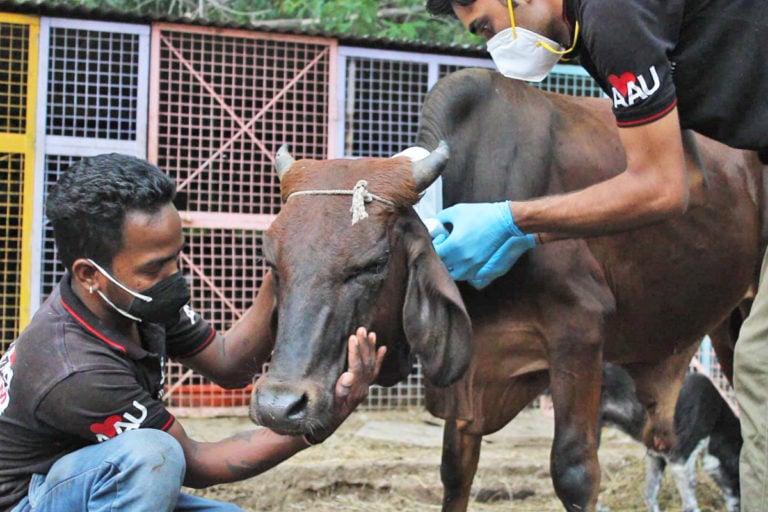
We care for around 100 cows at any one time, including animals who are unable to stand without help. Lifting a recumbent cow can take several members of our team hours of work each day, with repeated lifting often needed to support recovery.
A hydraulic lift would make this process safer and more manageable for our welfare staff, while helping us provide the intensive care these vulnerable animals need.
X-ray machines for faster, more accurate diagnosis
When an injured animal arrives with a suspected broken limb, an accurate diagnosis is vital to deciding the best course of treatment.
At present, our team relies on physical examinations and their considerable experience to assess these injuries. X-ray machines would allow us to identify fractures more accurately, make better-informed treatment decisions and plan the surgery or other care an animal needs.
Modern operating theaters for safer, more complex surgery
Our veterinary team carries out life-saving operations every day, often treating animals with severe injuries and complex medical needs. Improved operating theaters, with modern surgical equipment and more advanced anesthesia and monitoring technology, would help us take on more challenging procedures and provide a higher standard of care.
These improvements would support our vets throughout surgery, allowing them to monitor patients more closely, manage anesthesia more carefully and give seriously injured animals the best possible chance of recovery.
Temperature-controlled wards
Rajasthan’s climate can be extreme. Summer temperatures can reach 40–42°C, while winter brings bitterly cold nights and the monsoon can bring heavy rainfall.
At our current home, we do what we can to protect the animals from the elements, adding bamboo screens and extra coverings to shelter them from cold winds, rain and direct sunlight. These temporary measures help, but we know we can do better.
Our plans include temperature-controlled wards for dogs, cats, puppies, cows, other large animals and birds, with air conditioning in summer and heating in winter. These dedicated spaces will help vulnerable animals rest, recover and heal in a more comfortable, stable environment.
Dedicated trails for dogs with disabilities
Many of our permanent residents have mobility problems following road accidents or serious injuries. Once they have completed their initial hospital recovery, some move into our sanctuary areas, where daily physiotherapy and activities such as wheel cart walks help them stay physically active and mentally stimulated.
At the moment, our staff must physically carry some dogs from their enclosures to nearby pathways so they can use their wheel cart. These pathways also serve as routes for visitors, staff and ambulances, meaning activities sometimes have to stop to allow vehicles through.
At our new campus, we plan to create dedicated, longer trails for dogs using wheel carts, away from busy walkways. This will give them more opportunities to move around, explore and enjoy their surroundings with fewer interruptions.
Help us turn our plans into reality
Every donation brings this future one step closer.
Give today to Unlimited Unleashed